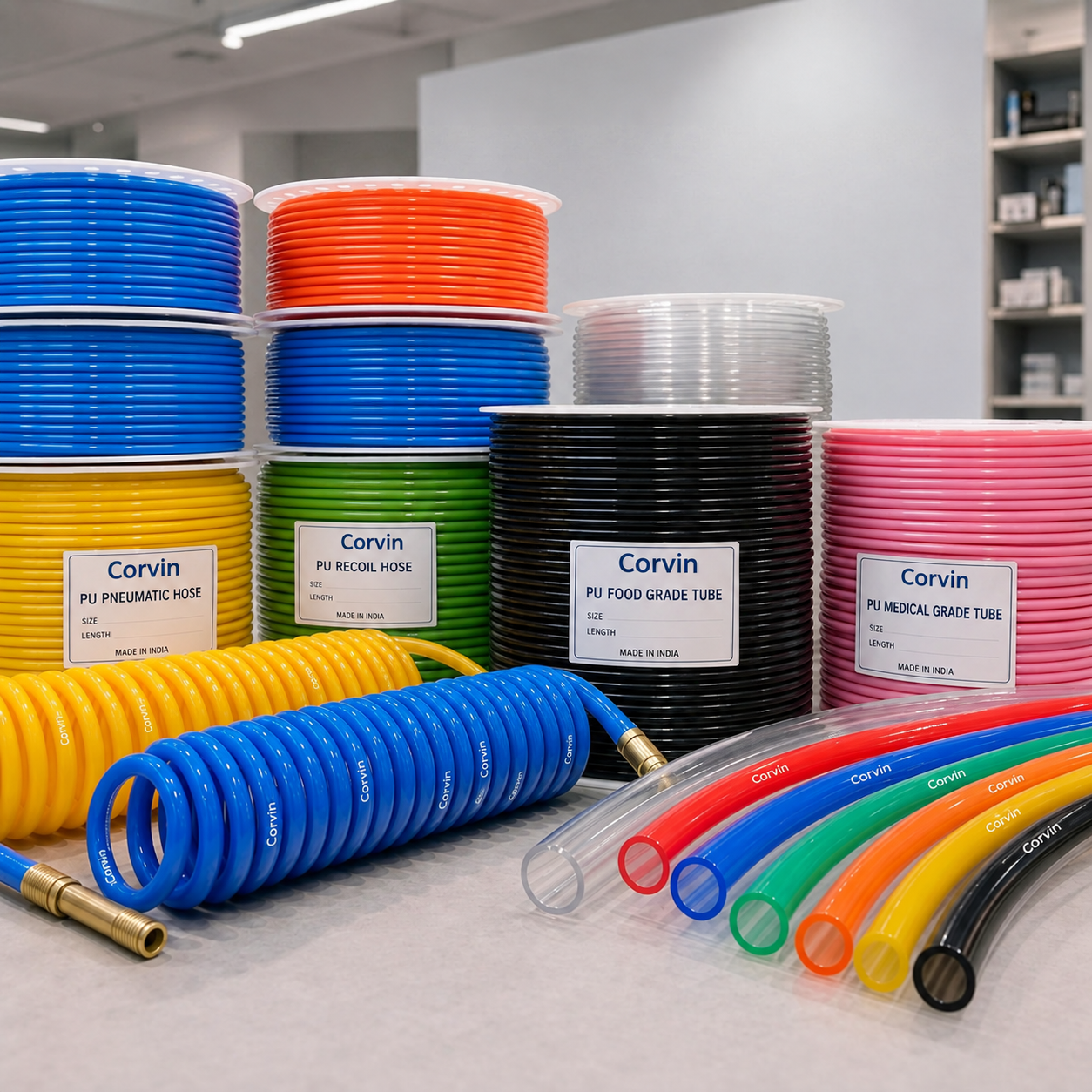
PU (polyurethane) and TPU (thermoplastic polyurethane) tubes serve different ends of the pneumatic spectrum. Understanding their differences helps you select the right tubing for your application.
Standard PU tubes (typically 95A hardness) offer excellent flexibility, kink resistance, and color variety at a competitive price. They are ideal for general-purpose pneumatic circuits, control panels, and FRL connections where operating conditions are moderate.
TPU tubes (typically 98A hardness) provide superior abrasion resistance, higher pressure ratings (12–18 bar), and a broader temperature range (–30°C to 80°C). They excel in heavy-duty applications including mining, robotics, and dynamic motion systems.
From a cost perspective, TPU tubes carry a premium of approximately 20–30% over standard PU tubes. However, their longer service life under demanding conditions often makes them more cost-effective over the total lifecycle.
For applications requiring the best of both worlds, consider your duty cycle. If the tube undergoes constant flexing, high abrasion, or extreme temperatures, TPU is the better choice. For standard pneumatic connections with moderate duty cycles, PU tubes deliver excellent value.